Search This Blog

Showing posts with label Workshops. Show all posts

Tuesday, 15 December 2020

Message in a Bottle - Workshopping in a Pandemic

Frances Judge, Making Conversation, Manchester Art Gallery

This is a reflection on my work as a freelance artist delivering workshops this year for the adult Learning, Early Years and Health and Wellbeing Programs in Manchester Art Gallery's Learning team  and for people with mental health needs at TLC Art Project The Learning team and TLC are doing incredible work, initiating and running multiple projects under the most difficult circumstances.

At the start of the year my role as a freelance artist looked completely different. In essence my job was to gather people together in gallery and community settings and Sure Start centres. These spaces were a place of exchange; exhibitions, artworks, materials, debate, stories and discovery. They were tactile, messy, busy and vibrant spaces, each one a shared experience of art and a route to togetherness that we will never take for granted again.

These physical spaces disapeared over night in March, the gallery's exhibitions and artworks retreated into it's website, mounds of materials, untouched, behind cuboard doors. And of course, the people were gone, there was such silence.

'Penny the Cat', Jonathan, TLC Art Project

Social isolation is not new, though I work with large numbers of people with very different lives across multiple projects, it is an issue that crops up repeatedly. The reasons for this isolation are many and complex, for example; becoming a parent for the first time when your family live in a different country, being agoraphobic, or waiting years for your new guide dog and having to rely on friends to guide you outside of your home.

Covid brought isolation for everyone, in a way we could never have imagined. How could I reach people now, without the space, artworks, materials, gesture, touch?

Postcard Project, Tony, Making Conversation, Manchester Art Gallery

One route was technology, making films, zoom and social media. Like most people, I have dabbled in these this year, however this has not always been the right route. Many of the adults I work with don't use technology for economic reasons, disability or personal preference. And everything the babies and early years children needed was physical; drawing tools, paint, reflective surfaces, textured fabric...We learned early on from our Sure Start partners that some families lacked even the basics such as paper and scissors.

My working method changed to delivering workshops by post, email and over the phone. To supply materials, we formed a production line, filling the gallery's atrium and sending them out in boxes to hundreds of families I may never see, a message in a bottle.

Materials for babies born in lockdown, Manchester Art Gallery in collaboration with Sure Start

My approach to workshops has always been that they should be participant led, a two-way conversation. Ideally each workshop is a space I make which gently nudges people towards their own ideas, making and discovering. I plan a workshop and over the years perhaps come to know how people may respond, but really most of the work happens in the moment, it is about noticing, gesturing and encouraging the people in front of me. This year, without people, I found myself working blind.

I shifted to working by memory, having to place faith in my previous experience. Materials chosen for babies and young children that I know other children responded well to in workshops past, films suggesting how to explore materials or mindfully make marks were 'performed' by imagining people beyond the camera. Positive feedback has come back out of the ether I am delighted to say, but I would have loved to have been there the moment each of those boxes of materials were opened, or when the first marks were made...

Music drawing, Jonathan, TLC Art Project

One place where I have felt able to work with people in a way smilar to the call and response of a 'normal' workshop, is through phone calls. Phone calls were initially simply a necessity, I needed to audio describe artworks and workshop plans to blind and visually impaired people who live alone, or phone people who do not use, or have access to, technology. However, I have come to favour the phone calls as a remote workshop method. A phone call allows for an immediate two -way conversation, less self conscious than zoom, a perfect combination of intimacy and non-visual anonymity.

These conversations can, and do, meander in interesting ways. We begin with artworks I have described or printed out and sent through the post, or an artwork the person I'm speaking with has made and described to me. Inevitably questions, stories, memories, the things and people we miss, all tumble out in response to those initial artworks, taking us further and further away from the start of the conversation where my question "How are you?" is rarely met with a positive response. Art takes us somewhere, sometimes it brings us face to face with our feelings and fears about the pandemic and at others it takes us somewhere funny, tender, beautiful. And I say we, because I am not a machine, these points of contact have been beneficial to me too.

Anonymous, TLC Art project

There are of course disadvantages to working one to one over the phone too, removing the framework of a physical setting and other people, means that lines can become easily crossed, and it can be emotionally draining. Something I always have to keep an eye on. However, for me, the benefits far outweigh this. I am able to reach people who are not only bound to their houses temporarily beacuse of Covid restrictions but long term, because of disability and mental health issues. I am able to tailor workshops to an individual's specific needs and intersts, to go on a significant journey with them in a way you can't when working simultaneously with a group of people. Gaining such detailed understanding of different people's relationships with and responses to art, feels like both a luxury and a place of learning for me.

Every call has to end and more often than not it ends with "when will we be back at the gallery", "When will Grovsner Street be open again?", "I really miss everyone, how long do you think it will be"?

Each workshop is a community, one person on the end of the phone can do a lot but can never replace that.

Almost a year and so many people have been reached by our work in the learning team at Manchester Art Gallery and the TLC Art Project, technology, post, phone calls and boxes of materials. The strangest, hardest and most revealing of times to be doing this, I wonder what we will take from it when we have had the time to take it all in, reflect, and see what we have achieved?

Thank you to the following for initiating and running these projects, for the work, for the support and for what we have been able to give, in spite of it all! Katy McCall Early Years Manager, Kate Day/Nicola Colclough Adult Learning Managers and Louise Thompson Health and Wellbeing Manager at Manchester Art Gallery and Alison Kershaw and Rae Story at the TLC Art project.

Annonymous, Making Conversation, Manchester Art Gallery


Friday, 18 November 2016

Drawing Space Workshops


Drawing and Sound

 Workshops and other participatory projects are an integral part of my practice, as part of my Arts Council England funded research and development project 'Drawing as Experience' I wanted to develop a new series of workshops. Taking place over three consecutive Saturdays as part of the Health and Wellbeing program at Manchester Art Gallery, these workshops were open to the general public and participants I had met from St Lukes Art Project in Longsight (a project run by Alison Kershaw that enables people including those with mental health needs to develop their art practice). I also invited Rae Story, one of a team of artists who help to run St Lukes Art Project to develop and deliver one of the workshops.

Each workshop focused on a different aspect of drawing, the first was looking at drawing as a tool for noticing (both the subject and ourselves), the second, led by Rae Story was an exploration of drawing, light and movement which grew out of Rae's own art practice and role as a Qigong teacher. The final workshop focused on drawing in response to sound, including live music by Dan Bridgwood Hill playing violin and guitar.

Each workshop is a carefully built space, as much psychological as physical; from each drawing method developed, to the lighting, choice of words, materials, timings, seating, coffee and length of breaks, every layer is put in place to help provide an environment in which people can feel comfortable and ready to embrace wherever their drawing may take them, to be fully in the moment.

Though the specific drawing techniques explored in Drawing Space are, on the surface, most obviously related to my drawing practice, it is this idea of a constructed environment where I notice perhaps an even stronger link - I see the act of drawing itself as a springboard, allowing me a psychological space to explore and describe, and I enhance this by creating specific environments to draw within, such as immersed in live music or while placed under hypnosis, these are my catalysts. The Drawing space workshops were an attempt to create the right kind of catalyst for others.

We all increasingly need a space that makes us stop, create and dream.

Noticing


Drawing and Movement


Drawing and Movement


Drawing and Sound


Thank you to the participants and everyone else involved in Drawing Space.

Some Participant Feedback:

'This was a magical and peaceful workshop'

'Loved it! First time Ive drawn since I was at school, this approach really helped me lose my inhibitions'

'Peaceful, introspective session, broadened my perception and allowed me to trust what was unfolding'

'Getting out of the house, performing and drawing, felt worth something'

'I feel relaxed'

I feel excited and energised.

For more photos of these workshops visit Manchester Art Gallery's Flickr album


Thursday, 4 November 2010

Remember, Remember the 2nd of November!


I have just carried out my first workshop for the 'Hands On' Project which focuses on day centers in Knowsley for people with learning disabilities and aims to introduce support staff and their “clients” to new creative activities and give them the confidence and inspiration to continue using their new found skills them selves.

This workshop was just for support staff to participate in, and I aimed to create a day they could enjoy and a chance to create for themselves. Within this I tried to subtlety address some of the key points of the training, to show; how much can be achieved with limited inexpensive materials, that process can be more valuable than the end product, that things made during the workshop can not be labeled right or wrong, and that the role of the support worker is to enable the ‘client’ to create for themselves.

I decided to take Bonfire Night as the starting point for my workshop as it is so full of sensory possibilities, and a familiar theme to most.

'Multi Sensory Speed Dating' - Participants find out about each other by asking things like 'What does your home sound like?' and 'What is your favorite smell?' This was followed by 'Show and Tell' were we each showed and talked about a personal object.

Bonfire Night Things - With lights dimmed and a soundtrack of fire works playing, participants put on the scarfs, felt and smelt the leaves and tucked in to some toffee apples.

'The Big Red Suitcase' All of my materials travel to workshops in this. During previous workshops with adults who have learning disabilities, exploring the suitcase and getting to know the materials through touch has been popular. So I asked participants in this workshop to close their eyes and get to know the materials they would be using.


Participants discuss and write down the smells, sounds, sights, tastes and feel of Bonfire Night. This progressed to translating feel both in terms of touch, and emotion. Fear was the word used to describe people who feel isolated and don't want to leave the house on Bonfire Night, and for those who find the sounds of explosions hold painful memories of war.

Drawing Winter Music

Drawing Winter Music

Drawing Winter Music - With each others hands, a bonding activity, which caused hysterics!

Creating fireworks collages


For the second half of the day I had planned activities that would directly reference the roles of support workers when working with people in a workshop. The first was to create a 'guy' in pairs. One person in each pair was to be 'the artist' and had to make the creative decisions about how the guy would look, the other person had to be 'the artist's assistant' making suggestions and gathering materials. The group quickly renamed the roles as master and servant!

After making the guys I asked each pair how it felt to work in that way, and if they had stayed in role. An interesting debate followed where we talked about how difficult it is to be enthusiastic about creating but then having to 'hold back'. I was really impressed with how readily everyone admitted to 'taking over' in their working lives when they are meant to be enabling, and how determined they were to change this.

I had called the final part of the workshop 'Mystery Activity' on all information given out prior to the workshop. Working in different pairs this time, I asked the participants to design an 'activity' and then make it, as if they were planning something for their 'clients' to do at the day center. Most pairs built on the sensory theme of the day. Above 'musical shakers'

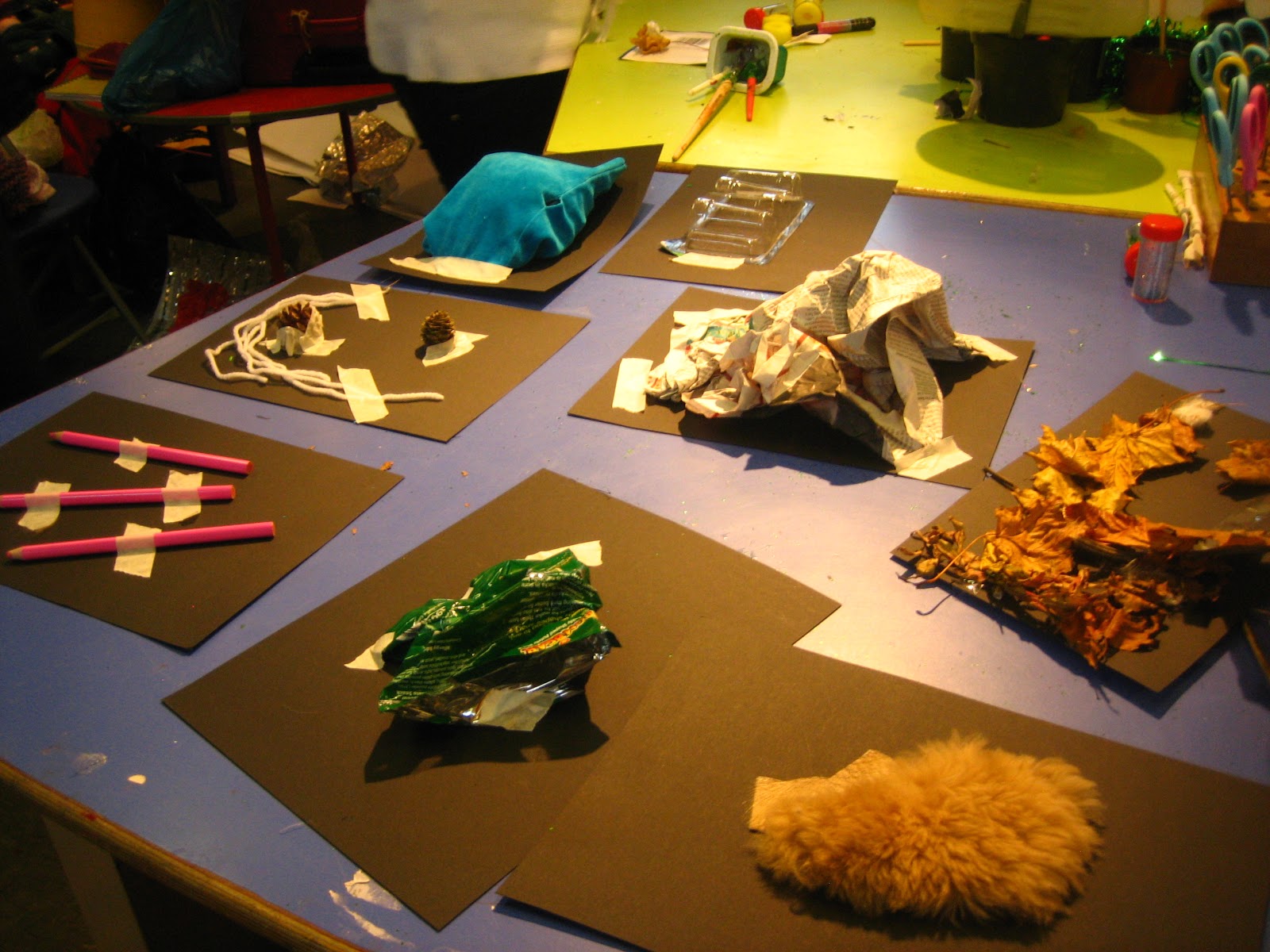
A 'Texture Box' with a variety of 'feely' surfaces on the outside and a selection of textures and surprising objects on the inside.

This was a particularly good example of creating something out of any/minimal materials. Each piece of card has a different tactile material secured to it, some even made noises when you handled them. I liked the simple effectiveness of these sensory 'flash cards'.


After the workshop Jean and Gerry, led a round up session in which we all discussed our roles within a workshop setting and came up with lots of useful creative solutions to problems that arise. I felt it was a very successful day, and the feedback was very positive, I even gave my soundtrack of fireworks to one participant who had been inspired to run an activity later in the week at her day center. Ideally all workshops contribute something to it's participants, but this felt particularly meaningful, as the repercussions of it could reach far wider than the immediate satisfaction of the people who were present. I hope that this is the case.

Thursday, 7 October 2010

'Making Conversation' - Workshop Profile

'Speed dating' with sensory questions

'What is Making Conversation?'
‘Making Conversation’ is a series of workshops that I run at ‘Manchester Art Gallery’ roughly three times a year. The workshops take place once a week in three-week blocks. For the first week we visit the current exhibition, discuss our personal responses to it, and the wider issues the work touches on. The participants then discuss what they would like to make in response to their experience of the exhibition, including any new techniques they would like to try. Over the subsequent two weeks the participants create work, often collaboratively, and I help facilitate this. I will also introduce some short activities that link in with themes the participants have chosen to explore. Over the course of 'Making Conversation' the work participants have produced has varied enormously, for example: performance, creative writing, photography, sculpture, drawing, digital art.
Creating sound art with dictaphones inspired by Bruce Nauman's 'Raw Materials'


"We Love Naomi" from Naomi Kendrick on Vimeo.

How it works
I plan each ‘Making Conversation’ by combining the themes and art forms present in the current exhibition with my own focus on muli sensory and self-directional experience, which is present across my entire art practice.  I provide audio description as we go around the exhibition and whenever else required. I use other sensory methods, such as sound effects, objects, taste and smell to provide further, multiple ways in to the themes of the exhibition. I take care not to influence the opinions of participants when it comes to their views of the exhibition and decisions about what to make, and encourage volunteers working with me to do the same. My role is to build the confidence of participants, introducing them to new materials and techniques and ultimately to facilitate independent creativity and group discussion.

Generating random questions with a dictionairy for mail art
Open Doors = Great Conversation
I established the workshops in 2006 with the invaluable encouragement and support of the Adult Learning Manager at the gallery, Meg Parnell, and more recently her job share colleague, Kate Day. ‘Making Conversation’ was originally aimed at local visually impaired and blind people.
Over the past couple of years Meg, Kate and I have actively worked to broaden the Making Conversation audience. This has not just been about increased numbers, but specifically to advertise it as ‘open to all’. Our reason for this, successful, shift in marketing is our shared belief (with ‘Making Conversation’ participants) that audiences should not be separated out because of a disability or social ‘category’ but rather should be free to select their events because of personal interest. There are for example people who attend the Galleries programmed audio described tours, but do not come to ‘Making Conversation’, both offer a sensory approach to the exhibition, but, and it sounds obvious, some people want to make and some just want to listen.


‘Making Conversation’ now consists of an established group of regulars who have been coming since 2006 and new participants; together they make up a diverse group of visually impaired, blind and sighted people with a relationship to art that varies from the professional to very limited previous contact. Meg and Kate advertise the workshops through gallery publicity, including a notice in the exhibition space, through ‘Henshaws’ (a local organisation for blind and visually impaired people) and by contacting regulars directly by phone or e-mail.
What it’s like for us
The diversity and enthusiasm of ‘Making Conversation’s’ participants makes it hectic to run at times but also a great social situation, full of rich discussion and personal discovery. That goes for me as much as for the participants. The feedback we have had from participants themselves has been very positive; here is some feedback from Gary a participant since day one of ‘Making Conversation’.

‘Over the workshop lifetime I have found participation fun and a relaxed atmosphere, a wonderful opportunity to meet like-minded individuals who equally share an  interest  in the exhibitions and artwork at Manchester Art Gallery, who provide a valuable social amenity.
And an excellent opportunity to develop social and communication skills bringing together groups of individuals from diverse backgrounds who in many cases feel excluded from society and therefore unable to participate in activities non-disabled members of the public take for granted.
I feel that the Making Conversation workshop’ is also an excellent opportunity for disabled (particularly the visually impaired like myself) to gain equal access to not only physical exhibits and artefacts but also actual human contact and discussion, in order to interpret the exhibits in a unique perspective.
I undertake voluntary work twice a week on a regular basis at The Imperial War Museum and the Making Conversation workshop’ give me an excellent opportunity to relax and enjoy my hobby activity in a stress free zone’

All images are from 'Making Conversation' Sept 10, working with the exhibition 'Recorders'
To see more examples of 'Making Conversation' follow Manchester Art Gallery's flickr links below
Making Conversation June 2010
Making Conversation February 2010
Making Conversation July 2009

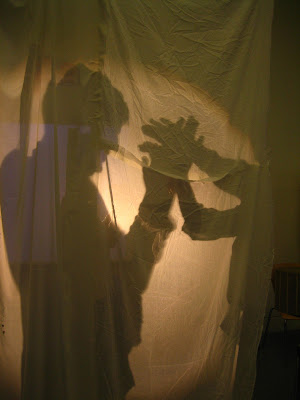
Shadow work
Participants create work to interact with the exhibition 'Recorders'

‘Hands On’ – Practice Sharing & Creative Consulting


What is ‘Hands On’?
I have been selected to work for ‘Hands On’ a project created by Access to Heritage (part of Liverpool Mencap) Managed by Artist Ticky Lowe, who increase opportunities for people with learning disabilities to create and access art in and around Liverpool. Links to Access to Heritage and other projects I have carried out with Ticky.
http://accesstoheritageticky.blogspot.com/
http://getclosertowildflowerseeds.blogspot.com/
http://tickylowe.com/banquet-0
http://tickylowe.com/puddings

Access to Heritage - Naomi Kendrick - Get closer to wildflower seeds

‘Hands On’ focuses on day centres in Knowsley for people with learning disabilities and aims to introduce support staff and their “clients” to new creative activities and give them the confidence and inspiration to continue using their new found skills them selves. This is also an opportunity for myself and the other artists to increase our experience of working with people with learning disabilities.
Access to Heritage - Naomi Kendrick - Banquet
My Practice Sharing & Creative Consulting
This project along with one in development at Fabrica Gallery, Brighton. Sees the realisation of my desire to share my experience and methods in creating multi sensory, self-directed workshops and participatory events for diverse audiences. This work grows out of more informal mentoring, where by arts professionals and recent graduates have consulted me and participated in my workshops as a way of increasing their own understanding of working with diverse audiences. It enables me to draw on methods discovered in an aspect of my own training, with Cemea (centre for active education methods) France. As well as my recent M.A by research through practice ‘What is a multi sensory and participatory arts practice?’ 2009.
Cemea link 


What I will do during ‘Hands On’
My role in ‘Hands On’ is to co – run training for support staff, including providing them with a workshop and then carrying out a further 10 workshops for “clients” and support staff together. I recently had my first day of work on the project, where I joined the two other artists working on the project, and Access To Heritage at a day centre. Here we were given an over view of the project, discussed what needs to be addressed during training, with Jerry and June, two fantastic support workers. And had the indulgent experience of participating (for a change!) in a workshop ourselves, along side people from the daycentre – an affirmation that the most effective method of finding out is to participate.

I found our discussions with Jerry and June the support workers particularly useful, and was keen to contribute to them. We discussed, from the perspective of artists and support workers the following;

-What our roles where within a workshop situation
-What are responsibilities were and were not
-What works and doesn’t work in a workshop involving artists and support workers
-How we would engage the support workers and build their confidence to use creative activities in their work on a regular basis
-Support workers potentially enjoying a workshop ‘too much’ by creating something for themselves and rather than enabling the ‘client’ to do so
-Support workers finding ‘creative solutions’ within an activity rather than worrying about right and wrong
-The importance of everyone involved knowing what will take place prior to a workshop and evaluating afterwards -ground rules for the training such as not using jargon, there are no silly questions.
And much more…

The spoon dolly I made during the 'Hands On' workshop
The “Art” issue
Though most support workers are open to the idea of visiting arts venues and doing arts activities, part of the training we will provide has to take into consideration those who are less confident with the term ‘art’ and are worried about ‘right and wrong’ or what is achievable within this. I find it interesting that this crosses over with my experience of working alongside arts professionals. Here the right and wrong aspect is more likely, though not exclusively, to reference ‘types’ of workshop participants, namely what is the ‘correct’ way to engage people with disabilities in a gallery? Confidence building and the engagement of everyone involved in a workshop, appear to be key.

I am now full of ideas for my forthcoming workshop for support workers.  I realise I will need to show the breadth of what constitutes an art activity & engagement, to demonstrate that activities just need to be tried, to really know what works. And most importantly of all encourage creative and often intuitive thinking to find the right path, within a set of circumstances involving individual participants, that will differ every time - for this reason alone there really can be no right or wrong.

In preparation for my forthcoming training workshop for support staff for the 'Hands On' project, I have been asked, by support staff June and Gerry, to identify the 'good' and 'bad' experiences I have had carrying out workshops for with people who have learning disabilities. This information will be used for discussion during the workshop.

Good
  • Working with fantastic participants and seeing them enjoying themselves through making/experiencing art
  • Participants showing me new things about materials, whether they are appealing, not appealing, and how many things they can be used for/turned into. (this is particularly good for me as I use lots of different multi sensory materials in my own work and I can get an insight into how people will respond to them)
  • Discovering more about each participants personality as they discover new materials and make things.
  • Working with great support staff/group leaders who understand and support what I am trying to achieve in the workshops (particularly the importance of process i.e exploring materials and objects as well as the actual making)
  • Working with great support staff/group leaders who find creative solutions (using their knowledge of the participant) that help participants to get the most out of their time with me.
  • Working with great support staff/group leaders who communicate what participants are interested in, like or dislike, enabling me to have a better working relationship with that participant.
  • Support staff/Group leaders being confident in asking me questions about the activities I am running during the workshop.
Bad
  • Sometimes groups are late/have to leave early without much notice so I have to adjust the workshop content quickly.
  • Not knowing the specific needs/interests of a new group of participants
  • Support staff/group leaders making work 'for' the participant or just for themselves, instead of assisting the participant in the making process.
  • Support staff/group leaders thinking there is a right or wrong for participants making art work and being fixed on the idea of a 'finished product' rather than the value of process (making and exploring materials etc)
  • Support staff/group leaders leaving me alone in a room

Thursday, 22 July 2010

Naomi Kendrick Workshops


I have been running workshops for ten years at galleries, museums, schools and community organisations across the UK. These workshops have been attended by a diverse audience of all ages, including people with learning disabilities and visually impaired and blind people. I have developed multi sensory and self-directed workshop methods that enable as wider audience as possible to engage with contemporary art. These methods have grown out of: my own art practice, running *Elephant Project and training with CEMEA (Training Centre for Active Education Methods, France)

I established *Elephant workshops in 2003 with funding from the Arts Council. The reason for creating Elephant was to increase opportunities for visually impaired and blind people in the UK to engage with and create art. This has since expanded to include all audiences.

Elephant has carried out workshops and exhibition tours nationally in partnership with galleries, community groups and other organisations, giving hundreds of people of all ages, the opportunity to experience contemporary art exhibitions and create their own work.


My approach to engaging participants with an exhibition is multi sensory and includes using verbal (audio) description in combination with objects, sounds, smells and even tastes inspired by the exhibition that together offer ‘multiple ways in’ to the work for the participants. There is also a strong focus on discussion, exploring themes around the exhibition and the response this evokes in the participants personally. Workshops that involve participants making their own work are also multi sensory and self-directional in nature, and involve working across art forms. Participants are encouraged to realise their own ideas and explore new techniques, my role within this is to enable participants to create their work, offering guidance but without dictating the result. Work made during such workshops ranges from sound pieces and performance to photography, creative writing and sculpture.


Workshops:
Museums and Galleries: Tate Britain, The Royal Academy, London, Fabrica Gallery,   Brighton, Brighton Museum and Art Gallery, Brighton, Manchester Art Gallery, Manchester, Aspex gallery, Portsmouth, Tate Liverpool, Liverpool, The Bluecoat Arts Centre, Liverpool, Turnpike Gallery, Leigh, Manchester Museum, Manchester.

Other Organisations: CEMEA (Training Centre for Active Education Methods, France), Engage (National Association of Gallery Education), Lime (connecting health care and the arts), St Dunstans (for blind ex service men and women), Henshaws (Society for Blind People), VIC (Visually Impaired in Camden), Bradbury Fields (services for blind and partially sighted people), Liverpool, The West Of England School For Children With Little Or No Sight, Art Through Touch (art centre for blind and visually impaired people) Access to Heritage, The Wildflower Centre, Liverpool.


 For more inforamtion about my workshops see other 'workshops' posts and follow the links below

http://tinyurl.com/TwentyTenNaomiKendrick
http://www.elephantproject.co.uk/